Reference
German military ammunition
Four service cartridges in this catalogue: 9×19 mm Parabellum, 7.92×57 mm Mauser, 7.92×33 mm Kurz, and the 13.2×92 mmSR TuF round of the 1918 Tankgewehr. Identification notes for collectors. Not loading data.
Photographs are of inert study cartridges. Live ammunition is subject to the law where you live. This site does not sell ammunition.
1902 adoption; German service through 1945 and after
9×19 mm Parabellum
9 mm Pist. Patr. 08
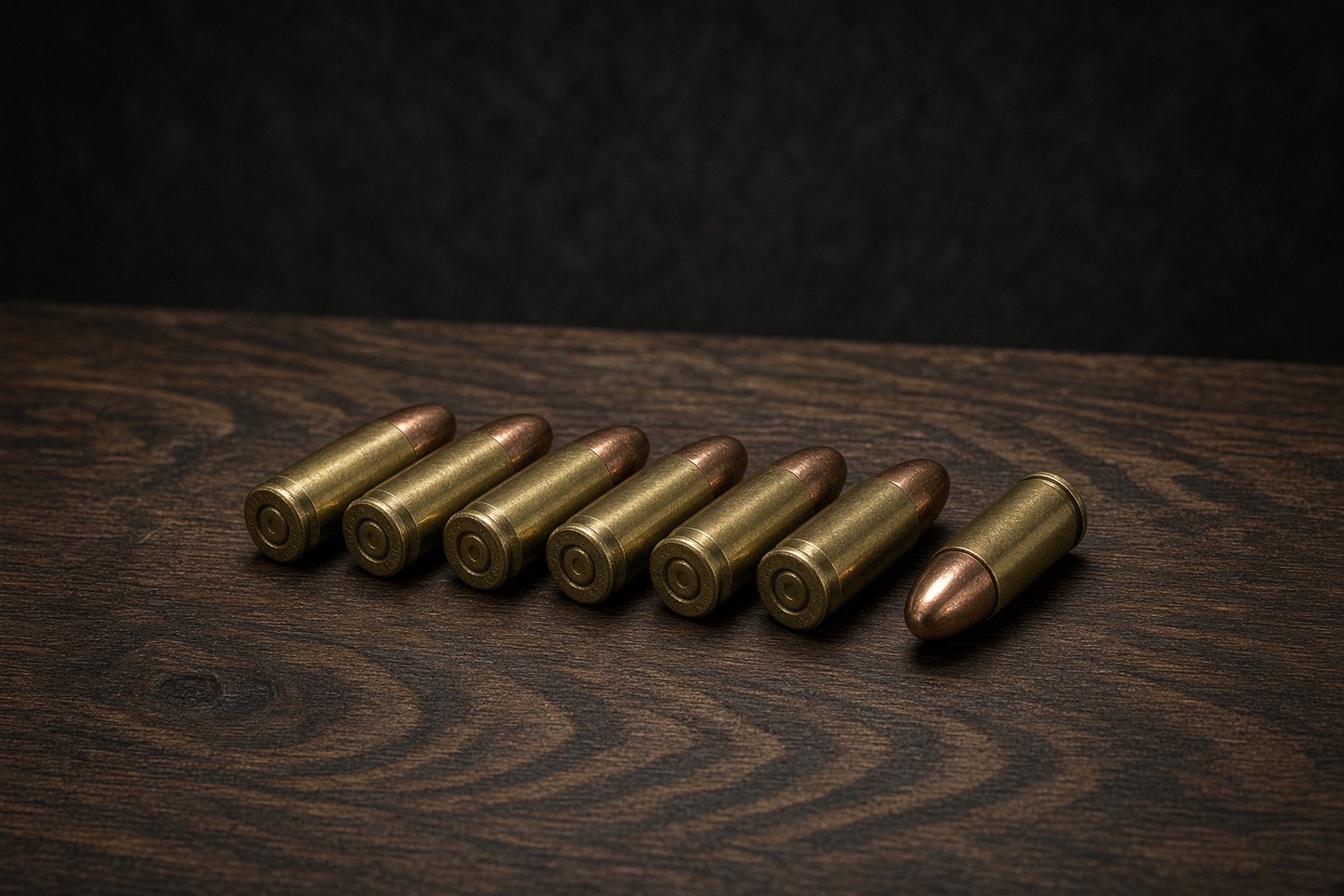
| Role | Pistol and sub-machine-gun cartridge |
|---|---|
| Case | Rimless, tapered brass (steel in late-war production) |
| Projectile | 8 g (124 gr) FMJ round-nose, later truncated-cone and steel-core variants |
| Used in | P08 Luger, P38, MP 18/28/38/40 family, and other 9 mm service pistols |
Georg Luger’s 9 mm Parabellum (1902) is the pistol round of the German army from the Pistole 08 onward. In German documents it is Pistolenpatrone 08. Case length is 19 mm; it is not 9 mm Browning Short, not 9 mm Steyr, and not 9×25 Mauser Export.
Standard ball was a 8 g jacketed round-nose at roughly 320–350 m/s from a P08 barrel. Sub-machine guns (MP 38/40) used the same cartridge; they did not have a separate ‘MP only’ ball as a collector category, though lots were packed and marked for machine-pistol use.
Wartime production moved from brass to steel cases (often lacquered). Headstamps carry factory code, date, and delivery. Collectors should photograph the headstamp before arguing about a ‘rare’ load. Corrosion on steel-case 9 mm is ordinary, not a factory defect.
Identification errors: 9 mm Luger dummy and exercise rounds (Platzpatrone) with wooden or crimped bullets are not live ball. Postwar 9 mm NATO and commercial 9 mm Parabellum are the same cartridge family, not German military lots.
Principal loads
- Pist. Patr. 08Standard ball, FMJ. The ordinary pistol and MP cartridge.
- Pist. Patr. 08 m.E.Mit Eisenkern — iron/steel core. Penetrating load; jacket still copper-washed or plated.
- Platzpatrone 08Blank / exercise. Wooden bullet or rose-crimp. Not a live projectile.
- Late-war StahlhülseSteel case, often green-lacquered. Headstamp factory codes as for rifle ammunition.
Related notes: Pre-war vs wartime vs postwar Mauser finishes
1888/1905 family; S-Patrone 1905; sS from 1933 as the rifle standard
7.92×57 mm Mauser
8 mm Mauser; 7.9 mm; Infanteriepatrone 7,9
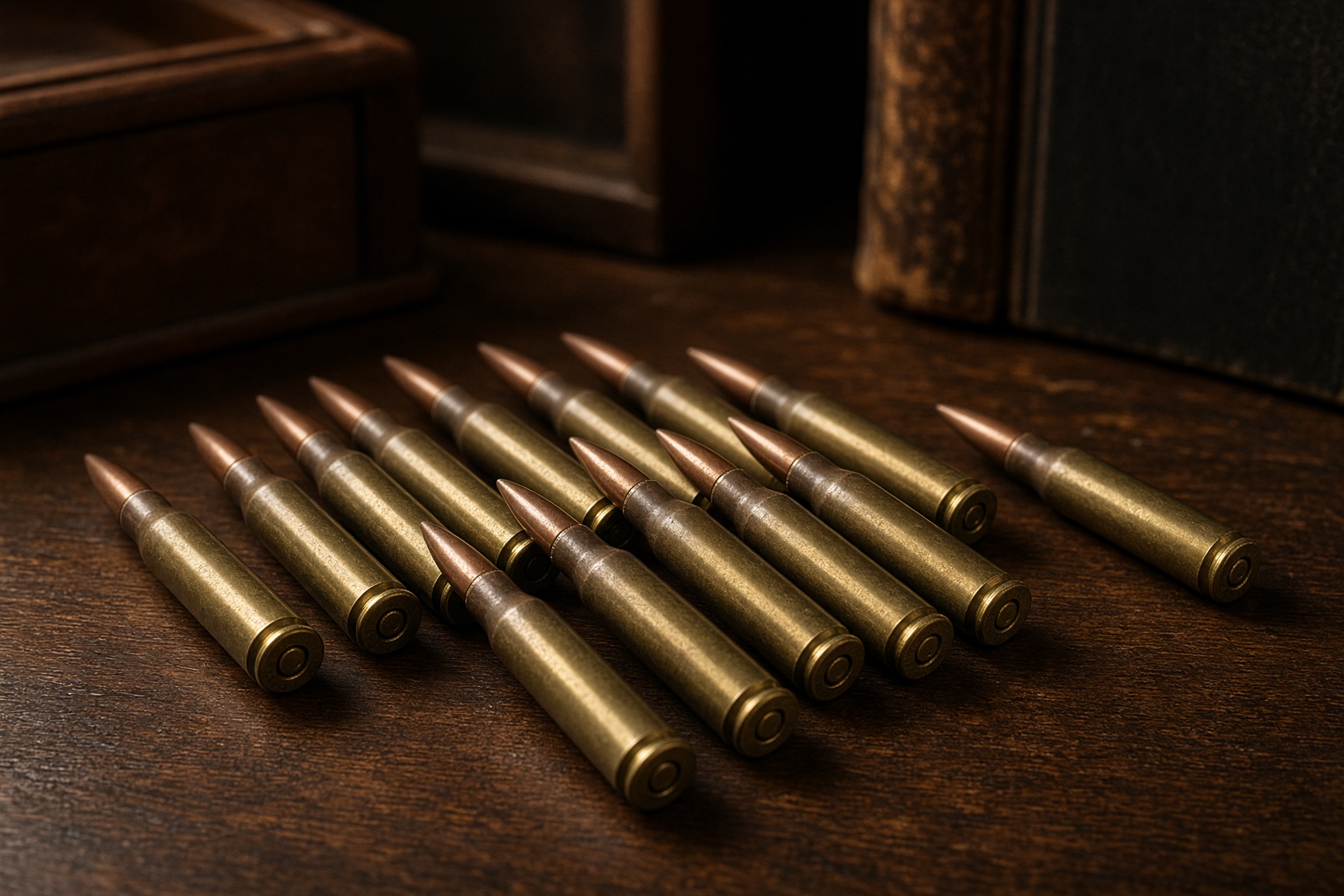
| Role | Standard rifle and machine-gun cartridge of the German army |
|---|---|
| Case | Rimless bottleneck, 57 mm; brass, later steel |
| Projectile | sS (schweres Spitzgeschoss) 12.8 g pointed FMJ; earlier S-Patrone 10 g |
| Used in | Gewehr 98, Kar 98a, K98k, MG 08, MG 34, MG 42, and related 98-action rifles |
The 7.92×57 (commercially ‘8 mm Mauser’) is the reason the Gewehr 98 and K98k exist. German military nomenclature is 7,9 mm. Do not confuse the I-bore 8×57 I (0.318 in) sporting round with the IS / JS 8×57 (0.323 in) military bullet. A military 98 barrel is the IS diameter.
1905 S-Patrone: 10 g pointed (Spitz) bullet, replacing the earlier round-nose 1888/S88 family. 1933–34 sS (schweres Spitzgeschoss): 12.8 g pointed boat-tail, adopted as the standard for both rifle and machine gun so that one ball served the squad. Trajectory and barrel wear differ from S-Patrone; a 1938 K98k was regulated for sS.
Machine-gun belts were often sS. SmK (Spitzgeschoss mit Kern) is steel-core armour-piercing. SmK L’spur is AP tracer. SmE (mit Eisenkern) is a wartime iron-core ball meant to save lead. S.m.K.H. is a rare tungsten-core AP. Colour of the bullet tip and primer annulus is the field identification — photograph it.
Cases: brass through the 1930s; steel (Stahlhülse) dominates 1942–45, often lacquered. Headstamps: factory code, date, delivery. Polish, Czech, and Austrian 8 mm Mauser lots are not German military 7,9 unless so marked. Israeli 7.62 NATO conversions in this gallery are a later chambering, not 7.92.
Principal loads
- S-Patrone10 g Spitz, 1905 pattern. Still found in WWI and early Reichswehr lots.
- sS12.8 g heavy pointed. Standard rifle/MG ball from the mid-1930s.
- SmK / SmK L’spurSteel-core AP, and AP tracer. Tip colour codes the type.
- SmEIron-core ball, wartime lead economy. Do not treat as a sporting load.
- Platzpatrone / ExerzierBlank and drill. Wooden bullet or dummy. Not live 7.92.
Rifles in this gallery: Gewehr 98 · K98k, Mauser Oberndorf · K98k, byf 43 · K98k, swp 44 · Karabiner 98a
Related notes: Gewehr 98 to K98k: what actually changed · Where hammer-forged rifle barrels originated · How to read K98k maker codes and date stamps
Developed c. 1938–43; service with MKb 42, MP 43, MP 44, StG 44
7.92×33 mm Kurz
Pist. Patr. 43; 7.9 mm Kurz; intermediate cartridge for the Sturmgewehr
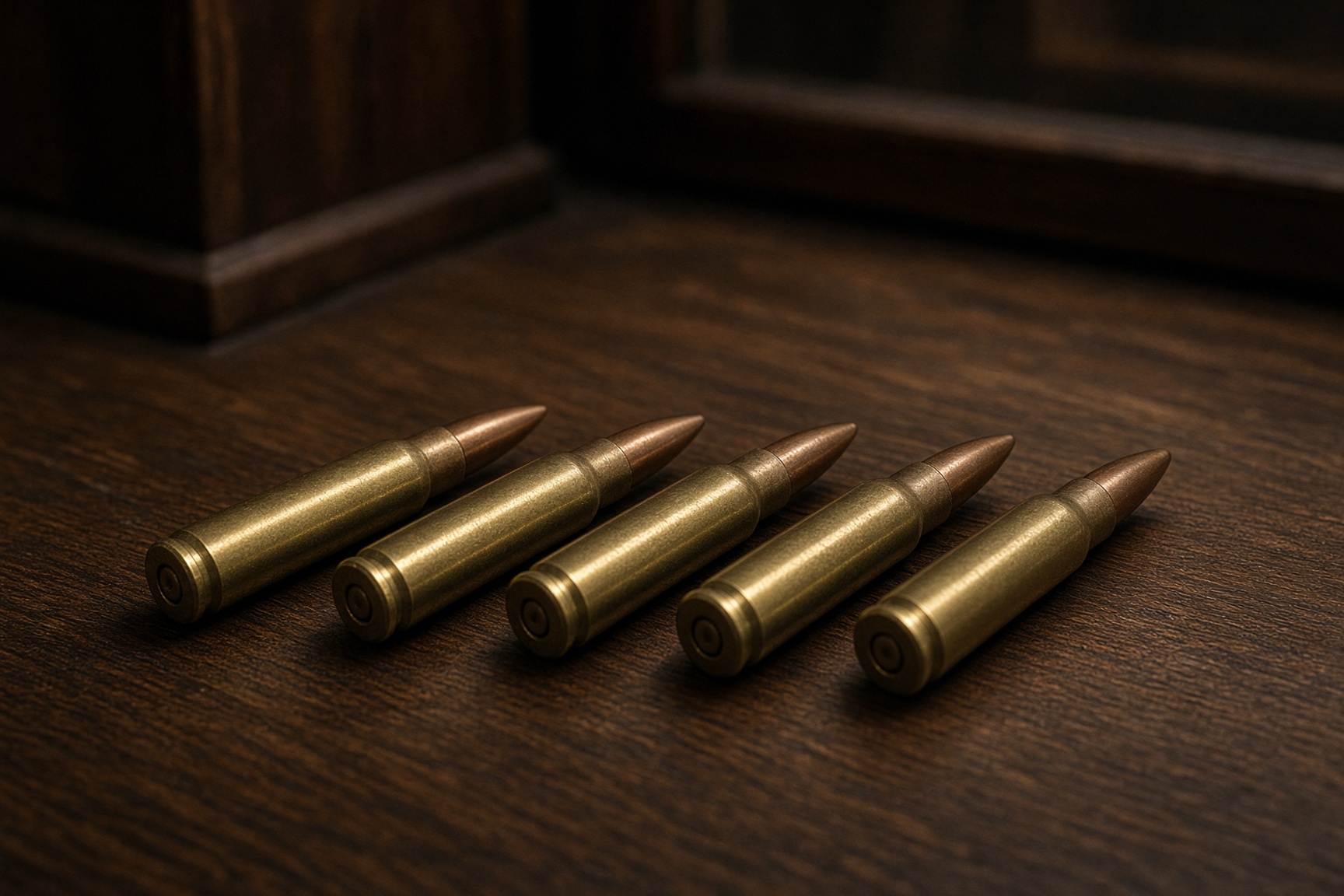
| Role | Intermediate assault-rifle cartridge |
|---|---|
| Case | Short bottleneck, 33 mm; typically steel, lacquered |
| Projectile | Pointed FMJ about 8 g, shorter than sS, not interchangeable with 7.92×57 |
| Used in | MKb 42(H), MP 43, MP 44, Sturmgewehr 44; not for K98k or MG 42 |
7.92×33 Kurz is the German intermediate cartridge: more than a pistol round, less than sS rifle ball. It was developed so a soldier could carry more ammunition and control automatic fire from the shoulder. The Sturmgewehr 44 (and MP 43/44) is the service weapon. A K98k will not chamber it; an MG 42 will not feed it.
The case is 33 mm, bottlenecked, usually steel. The bullet is pointed and of rifle form but lighter and shorter than sS. Headstamps follow the same factory-code system as other small-arms ammunition. Collectors should measure case length before listing a round as Kurz. A 7.92×57 with a pulled or damaged neck is not Kurz.
This cartridge is historically the break from the 1898 full-power rifle idea. It belongs in a Mauser gallery as context: the K98k remained the standard rifle, while the Kurz round and the Sturmgewehr were the parallel 1943–45 system. Do not describe a 7.92×33 rifle as a ‘short K98k’.
Postwar 7.62×39 and 5.56×45 are different intermediate families. They are useful comparisons, not German Kurz ammunition. Surplus 7.92×33 is scarce; fakes and mixed boxes exist. Photograph the headstamp and a scale.
Principal loads
- Pist. Patr. 43Standard Kurz ball for MP 43 / StG 44.
- Practice / dummyExercise and inert drill rounds. Confirm they are inert before handling as ‘live Kurz’.
- Steel-case service lotsLacquered Stahlhülse is normal, not a substitute case.
Related notes: Gewehr 98 to K98k: what actually changed
Polte and Mauser, late 1917; service 1918 with the Tankgewehr; MG 18 TuF planned for 1919
13.2×92 mmSR TuF
13 × 92 mm HR (German); 13.2 mm Tank und Flieger; T-Patrone
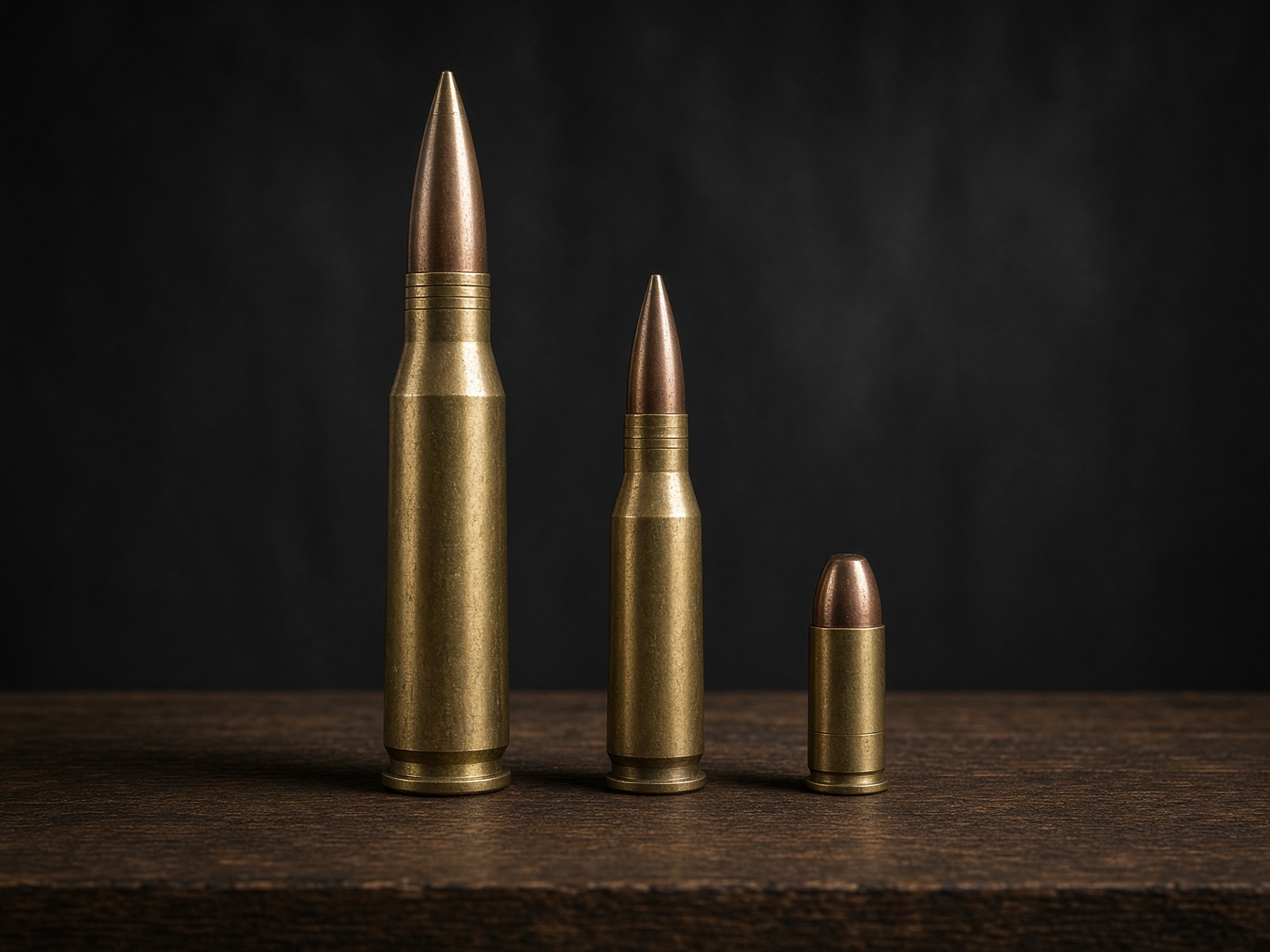
| Role | Anti-tank (and intended anti-aircraft) cartridge |
|---|---|
| Case | Semi-rimmed (Halbrand) bottleneck, ~91.7 mm case; brass |
| Projectile | About 52 g (c. 800 gr) pointed FMJ; German plates: Stahlkern 10.4 × 51.6 mm. English notes: tungsten steel (Wolframstahl / Hartkern) — not a solid tungsten core |
| Used in | Mauser Tankgewehr M1918 (T-Gewehr); intended for MG 18 TuF heavy machine gun, which did not reach service in numbers |
TuF is the cartridge, not the rifle. German lists: 13 × 92 mm HR (Halbrand), developed by Polte of Magdeburg with Mauser. English: 13.2 mm TuF (Tank und Flieger). The same round was meant for the MG 18 TuF Maxim of 1919. That gun was late. The Tankgewehr fired it in 1918. Collectors who say ‘TuF Gewehr’ are using a convenient label.
Projectile weight on German plates is about 52 g (English often 51.5 g / 795 gr). de.Wikipedia: streamlined Vollmantelgeschoss 64 mm long, 13.46 mm diameter, with a Stahlkern 10.4 mm across and 51.6 mm long. German blogs (Feuerkampf und Taktik) and dealers: Stahlkern or Hartkern. Muzzle velocity about 770–785 m/s from the long Tankgewehr barrel. German penetration: 20–25 mm Panzerstahl at 100 m.
Tungsten. English and workshop notes often call the core tungsten steel (Wolframstahl). That wording means hard tool steel alloyed with tungsten — a Hartkern — not a solid Wolfram penetrator of the later 7.92 mm SmK(H) type. German Wikipedia does not say Wolframkern. This catalogue records both: German Stahlkern / Hartkern of ~52 g, and the English ‘tungsten steel’ note, and does not treat the 1918 round as a tungsten-cored WWII cartridge.
The case is ~92 mm, semi-rimmed, bottlenecked. It will not chamber in a 7.92 rifle. British tanks answered first with thicker factory plate (Mark IV ~12 mm against the K bullet; Mark V thicker still) and by keeping moving: a 13 mm hole did not always stop the machine unless crew or engine were hit. Photograph headstamps. This site does not publish loading data. Do not load modern 13 mm sporting ammunition in a Tankgewehr.
Principal loads
- 13 × 92 mm HR / TuF APService round. ~52 g FMJ. German: Stahlkern 10.4 × 51.6 mm (Hartkern). English notes: tungsten steel (Wolframstahl), not solid tungsten.
- Intended MG 18 TuF beltSame cartridge family for a heavy Maxim that did not reach the front in numbers.
- Inert / drillStudy and dummy rounds. Confirm inert before any handling as ‘live TuF’.
Rifles in this gallery: Mauser Tankgewehr M1918 (T-Gewehr) · Gewehr 98
Related notes: The Mauser Tankgewehr M1918: TuF cartridge, T-Gewehr, and New Zealand at Grévillers · German military ammunition: 9 mm, 7.92×57, 7.92×33